

History of The Carmel of The Holy Trinity
T he Carmel of the Holy Trinity was founded by the Carmel of the Sacred Heart (in Quievrain, Belgium). We can trace our origins back to the Carmelite Reform undertaken by St. Teresa of Avila. After the death of St. Teresa, a few Spanish Carmelites came to France in 1604, and established the first Reformed Carmel in Paris. Several foundations were then made from the Carmel of Paris. In 1610, one of the Spanish Carmelites went to Bordeaux, where she founded the seventh Carmel of the Reform in France. In 1616, the Carmel of Bordeaux founded a Carmel in Toulouse, which, in turn, founded the Carmel of Limoges in 1618. In 1654, the Carmel of Limoges founded a Carmel in Angouleme. During the religious persecution, which raged in France in 1901, the Carmelites were expelled from their Carmel in Angouleme and took refuge in Enghien, Belgium. In 1925, they returned to France and established their Carmel in Tourcoing (Northern France). In 1949, the Carmel was transferred to Parkes, Australia, where it celebrated its third centennial in 1954.
The blood sister of Archbishop Marcel Lefebvre, Mother Marie Christiane, Foundress of the Carmel of Quievrain (then in the Carmel of Parkes, Australia) knew from her episcopal brother that many vocations were falling away because there was no Carmel in which the Tridentine Mass was offered. Having received the necessary permissions, she returned to Europe, and was later joined by Sister Marie Pierre. Together, they founded the Carmel of the Sacred Heart, in Quievrain, Belgium, in August, 1978. Over the next 12 years, the Carmel of Quievrain founded several others, including the Carmel of the Holy Trinity in the U.S.A. In 1984, property was acquired in Phoenixville, PA, near Philadelphia. On October 4, l985, Our Mother Foundress and six Sisters flew from Brussels to New York. The first Holy Mass was celebrated on October 5 in the tiny chapel of the temporary Carmel. On November 13, 1985, His Grace Archbishop Lefebvre blessed the enclosure and the Sisters resumed their regular cloistered life. With time, many obstacles proved that it would not be possible to establish a full-sized monastery in Phoenixville. In the summer of 1989, a suitable piece of property was found on the outskirts of Spokane, Washington. Eight months later, the first wing of the Carmel was completed and the Sisters moved into their new home on July 11, 1990. Our truly monastic Carmel is situated in a beautiful spacious park of splendid evergreens, to which the “painted hills” provide a fascinating horizon. In this picturesque setting, our Carmel awaits the generous vocations which Our Lord has chosen for it from all eternity.
The Order of Carmel and Its Seal
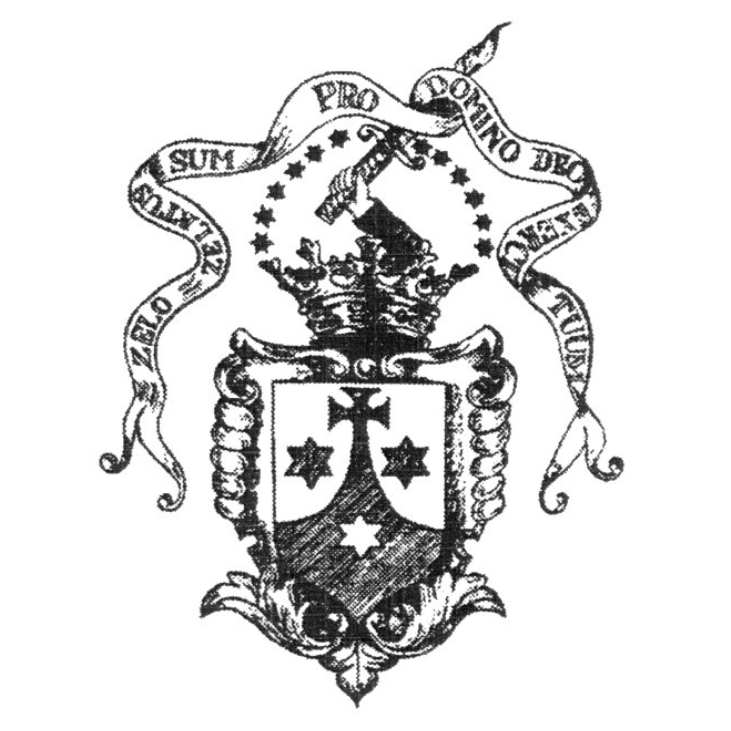
The Order of Carmel
GEOGRAPHICAL LOCATION
Mount Carmel is a chain of mountains about f ifteen miles long, running across Palestine between Tyre and Cæsarea. The mountain begins towards the northwest by a bold promontory, jutting out into the Mediterranean and rising abruptly nearly six hundred feet above the sea, the stretching towards the southeast it gradually reaches a height of seventeen hundred feet. The promontory overlooking the sea is the most sacred part of the mountain and is an ideal solitude. It was there the Prophet Elias had his principal dwelling place.
CARMEL’S FOUNDER
Carmel (vineyard of God) is often spoken of in Holy Scriptures, and is especially celebrated precisely as having been the dwelling place of the Prophet Elias, whose mighty deeds occupy so large a portion of the Sacred narrative. This great Prophet has always been regarded by the Carmelites as the Founder and the first Patriarch of their Order. This ancient and cherished tradition has been sanctioned by the Church, for the statue of the Prophet Elias stands in the Vatican among the Founders of Religious Orders, bearing the following inscription: “Universus Ordo Carmelitarum fundatori suo sancto Elias prophetæ erexit -The Order of Carmel has erected this to the Holy Prophet Elias its Founder.”
Read More
“ORDER OF MARY”
Nevertheless, the Order of Carmel has always been known as the “Order of Mary”, charged with the blessed duty of honoring her and of propagating her devotion in a special manner. Even long centuries before her coming, from the time of Elias she was known, loved and honored in Carmel. Some may wonder to hear of devotion to Mary nine hundred years before God gave her to the world, but it must be remembered that Mary was the bow of promise to mankind from the moment of original sin. Her beautiful image shines through all the sacred pages beside that of her Divine Son, and her radiance lighted up even the darkness of paganism.
Surely there is no cause for wonder that the family of Elias, consecrated by virginity, rendered solemn homage to the Virgin of virgins even before her birth, and was the first to welcome her, honoring her as Virgin Mother of the new-born Church.
The Carmelite breviary relates that on the feast of Pentecost, the holy Prophets who were enlightened by the Apostles, met and conversed with Our Lady, and that on account of their singular love for her, they paid her the respect of building a little chapel, the first that was ever raised in her honor, and which stood upon the part of Carmel whence Elias, in days of old, beheld that manifest type of her, “the little cloud like a man’s hand”, arising out of the sea. To this new chapel they repaired oftentimes, day by day, and in their sacred ceremonies, prayers and praises, honored the Most Blessed Virgin as the particular guardian of their Congregation. For this reason, they came to be everywhere called the Brethren of the Blessed Virgin Mary of Mt. Carmel, and the Supreme Pontiffs have granted indulgences to those who call them by this name.
THE SPIRIT OF CARMEL
The spirit of Carmel is pre-eminently the double spirit of Elias, the spirit of prayer and contemplation. This being so, the vocation to Carmel requires one to leave the world and all things created; to renounce self; to become established in the love of God; to dispose the soul for acquired contemplation, and to await with reverence the divine favors which may or may not be given in this life, but which will, without doubt, be bestowed in the next life upon all who have been faithful unto the end.
THE SEAL OF CARMEL
A close look at the Seal of Carmel (seen on the cover) will serve as a faithful guide to a better understanding of its Spirit and Rule. In the centre of the shield rises the Holy Mount of Carmel, the cradle of the Order, and symbol of its spirit of prayer and contemplation; especially by its isolation – which teaches that solitude is the home of the Religious of Carmel – and by its height. The Son of God had His heart and mind always elevated to His Father, and He had a particular inclination to dwell upon mountains. It was to mountains that He retired to make His prayer. On this shield there are also three stars, which represent the three epochs in the history of Carmel. The f irst, as if placed in a grotto of the Mountain, signifies the Prophetic era which extends from the time of Elias, who founded the Order in a cave, to the coming of St. John the Baptist. The second and third stars rising over the Mountains, signify respectively the Greek and the Latin eras, when the Order spread throughout the East and the West; that is from the time of St. John the Baptist to Berthold, the first Latin General; and from Berthold to the end of the world.
The cross of the summit of the mountain was added in the XVIth Century, as the distinctive sign of the Discalced Carmelites, and they also adopted for their crest, in memory of the Prophet Elias, the arm with the f laming sword and the legend, “Zelo zelatus sum pro Domino Deo exercituum”, “With zeal have I been zealous for the Lord God of hosts.” This signifies the zeal which is the rightful inheritance of Carmel and which has burned in her heart like a torch since the days when her Founder “stood up as a fire” for the glory of God; zeal which animated no less the generous heart of St. Teresa as she called upon her children, men and women of the Order, to be consumed with the zeal of the Apostles for the salvation of souls, and ardently to embrace the entire universe by the apostolate of prayer.
The crown is there as a reminder of the reward awaiting the faithful servant as St. Paul teaches, “Know you not that they that run , all run indeed, but one receives the prize? So run that you may obtain. And every one that striveth for the mastery refraineth himself from all things: and they indeed that they may receive a corruptible crown; but we an incorruptible one.
The twelve stars of the crown represent the attributes of Our Lady, the Virgin Mary, whom St. John saw in the Apocalypse under the figure of a woman clothed with the sun and crowned with twelve stars. They also signify the twelve points of the Rule, which are: Obedience, Chastity, Poverty, Recollection, Mental prayer, Divine Office, Chapter, Abstinence from Meat, Manual Labor, Silence, Humility and supererogation.